
Introduction
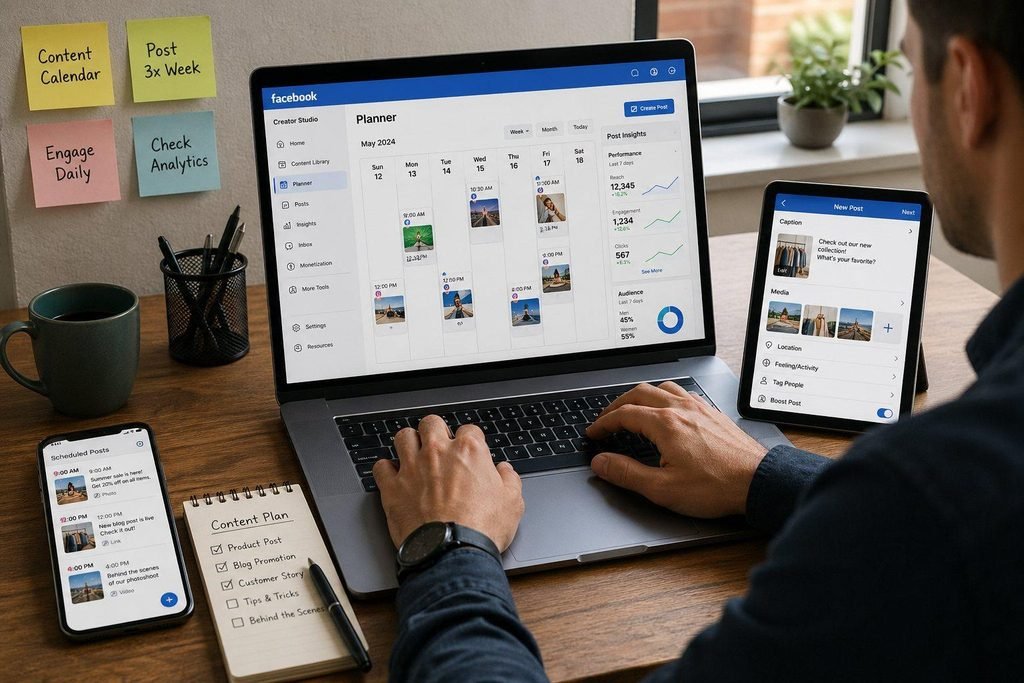
In today’s digital world, social media marketing has become an important part of business growth. Among the different social media platforms, Facebook continues to offer businesses opportunities to connect with customers, promote products, share useful content, and build brand awareness.
Whether you own a small business, run an online store, or are learning digital marketing, understanding Facebook marketing can help you develop a stronger online presence.
However, successful Facebook marketing involves more than simply creating a page and publishing posts. Businesses need to understand their audience, plan useful content, communicate with followers, and measure performance.
In this beginner-friendly guide, we will explore Facebook marketing for beginners, including how to create a business page, develop a content strategy, use Facebook advertising, and measure your results.
What Is Facebook Marketing?
Facebook marketing is the process of using Facebook to promote a business, product, service, or brand.
It can include organic activities, such as publishing posts and interacting with followers, as well as paid advertising through Meta’s advertising platform.
Businesses can use Facebook marketing to:
- Increase brand awareness.
- Share product and service information.
- Communicate with potential customers.
- Drive relevant traffic to a website.
- Generate enquiries and leads.
- Promote offers and events.
- Build relationships with their audience.
For example, a small jewellery business can use Facebook to showcase new collections, publish styling tips, answer customer questions, and promote products through paid advertisements.
Why Is Facebook Marketing Important for Small Businesses?
Facebook marketing can support business growth in several ways.
1. Build Brand Awareness
Regularly sharing useful and relevant content helps people learn about your business, products, and services.
2. Reach Your Target Audience
Businesses can create content for specific customer groups and, where appropriate, use advertising options to reach relevant audiences.
3. Communicate Directly With Customers
Facebook allows businesses to respond to comments, answer questions, and communicate with customers through available messaging features.
4. Promote Products and Services
Businesses can use photos, videos, posts, and eligible advertising formats to explain what they offer.
5. Measure Marketing Performance
Facebook Page insights and Meta’s available business tools can help businesses understand how people interact with their content and how campaigns perform.
6. Support Website Traffic and Lead Generation
Facebook content and advertising can direct interested users to websites, enquiry forms, online stores, or other relevant destinations.
Results depend on the quality of your content, audience, offer, budget, and overall strategy.
How to Get Started With Facebook Marketing
If you are new to Facebook marketing, follow these steps to establish your business presence.
Step 1: Create a Facebook Business Page
A Facebook Page gives your business a public presence separate from your personal profile.
To get started:
- Sign in to Facebook.
- Find the option to create a Page.
- Enter your business name.
- Select the most relevant category.
- Add a clear profile picture, such as your logo.
- Upload a suitable cover image.
- Write a short description of your business.
- Add accurate contact details and your website link, if available.
Keep your information updated so that customers can understand what your business offers and how to contact you.
Example: A digital marketing business could describe its services as SEO, social media marketing, content creation, and online advertising.
Step 2: Understand Your Target Audience
Before creating content, identify the people you want to reach.
Ask yourself:
- Who are my ideal customers?
- What problems do they want to solve?
- What products or services interest them?
- What questions do they frequently ask?
- What type of content would help them?
For example, a small clothing business may focus on customers interested in fashion, styling ideas, and new collections.
Understanding your audience helps you publish content that is relevant rather than posting randomly.
Step 3: Optimize Your Facebook Page
A well-organized Page helps potential customers understand your business quickly.
Make sure your Page includes:
- A recognizable profile image.
- An appropriate cover photo.
- A clear business description.
- Correct contact information.
- Accurate business hours, if relevant.
- A website link, if available.
- A suitable action button, where supported.
- Regularly updated posts.
Use consistent branding across your Facebook Page, Instagram account, and website to help customers recognize your business.
7 Facebook Marketing Strategies for Beginners
1. Publish Valuable and Relevant Content
Content is an important part of Facebook marketing. Your posts should provide information, answer questions, showcase your offerings, or encourage meaningful interaction.
Try different content formats, including:
- Educational tips.
- Product photos and demonstrations.
- Short videos.
- Behind-the-scenes updates.
- Customer reviews shared with permission.
- Frequently asked questions.
- Business announcements.
- Helpful industry information.
Example: A jewellery business could publish a post explaining how to style simple jewellery for everyday outfits.
Avoid making every post a sales message. A balanced content strategy gives people reasons to follow your Page even when they are not ready to buy.
2. Use Facebook Reels and Videos
Video content can help businesses demonstrate products, explain services, and introduce the people behind a brand.
Some ideas include:
- A quick product demonstration.
- A behind-the-scenes video.
- Three tips related to your industry.
- A short tutorial.
- A new product announcement.
- Answers to common customer questions.
Start with a clear message and keep the video focused on one main idea. Add captions when helpful so that viewers can understand the content without relying entirely on sound.
Choose video topics that match your audience’s interests rather than following every trend.
3. Maintain a Consistent Posting Schedule
Consistency helps you manage your content and maintain an active business presence.
You do not need to post several times every day. Start with a realistic schedule that you can maintain without sacrificing quality.
Here is a sample weekly content calendar:
| Day | Content Idea |
|---|---|
| Monday | Educational tip |
| Tuesday | Product or service highlight |
| Wednesday | Short video or Reel |
| Thursday | Frequently asked question |
| Friday | Customer feedback or testimonial |
| Saturday | Behind-the-scenes content |
| Sunday | Weekly recap or interactive post |
This is only a sample plan. Adjust your schedule according to your audience, resources, and performance data.
Planning posts in advance can make your marketing routine easier to manage.
4. Engage With Your Audience
Facebook marketing is not only about publishing content. It also involves communicating with people who interact with your business.
Make time to:
- Reply to relevant comments.
- Answer customer questions.
- Respond to messages promptly.
- Thank customers for genuine feedback.
- Ask useful questions in your posts.
- Share customer stories with permission.
Genuine communication can help build stronger relationships and make customers feel valued.
Avoid spam comments, misleading engagement tactics, or purchasing fake followers. These practices do not create meaningful customer relationships.
5. Use Facebook Groups Carefully
Facebook Groups can provide opportunities to participate in communities related to your industry or audience.
For example, a business owner might join relevant local or industry groups to learn about customer needs and participate in useful discussions.
To use groups responsibly:
- Read and follow each group’s rules.
- Answer questions when you can provide genuine help.
- Share relevant information without spamming.
- Respect community members.
- Promote your business only when permitted.
Focus on contributing value rather than treating every group as an advertising channel.
6. Try Facebook Advertising
Organic content helps you communicate with your existing audience, while paid advertising can help you reach additional people.
Facebook advertising is managed through Meta’s advertising tools, with available placements and settings depending on your campaign.
Common advertising objectives may include awareness, traffic, engagement, leads, and sales.
Before launching an advertisement:
- Define the result you want.
- Identify your target audience.
- Select an appropriate campaign objective.
- Prepare clear and relevant ad creative.
- Set a budget that fits your business.
- Choose a suitable destination, such as a website or enquiry form.
- Set up conversion tracking when relevant.
- Review performance and optimize based on data.
Example: A local clothing business could test an advertisement showcasing a new collection and direct interested users to its online store.
Start with a manageable budget. Paid advertising does not guarantee sales, and results depend on targeting, creative quality, competition, the offer, and the customer experience.
Official resource: https://www.facebook.com/business/ads
7. Track Your Facebook Marketing Results
Measuring performance helps you understand which activities support your business goals.
Depending on your Page and available tools, useful metrics may include:
- Reach: The number of people who saw your content.
- Views: How often content was viewed, according to the metric definition.
- Engagement: Interactions such as reactions, comments, and shares.
- Link clicks: Clicks on links included in your content.
- Messages and enquiries: Customer contacts generated through Facebook.
- Leads: Potential customer details collected through a suitable process.
- Conversions: Important actions, such as purchases or completed forms, recorded through your measurement setup.
- Cost per result: The average advertising cost for a defined campaign result.
Use the metrics that match your goal. If you want more qualified enquiries, for example, focus on enquiry quality and cost per qualified lead rather than reach alone.
Organic Facebook Marketing vs Paid Facebook Marketing
Businesses can use both organic and paid marketing, depending on their goals and resources.
| Feature | Organic Marketing | Paid Marketing |
|---|---|---|
| Cost | Usually no media spend required | Requires an advertising budget |
| Main activities | Posts, videos, comments, and community engagement | Sponsored ads and paid campaigns |
| Audience reach | Depends on content distribution and audience engagement | Can use advertising targeting options |
| Main benefit | Builds ongoing communication and brand presence | Can extend reach and support specific campaign goals |
| Measurement | Content engagement and Page performance | Campaign results, costs, and conversions |
Neither approach guarantees success on its own. Many businesses combine organic content with paid campaigns to support different marketing objectives.
Common Facebook Marketing Mistakes to Avoid
1. Posting Without a Strategy
Decide what you want each post to achieve, such as educating your audience, building awareness, or generating enquiries.
2. Ignoring Customer Messages
Slow or missing responses can create a poor customer experience. Set aside time to respond to genuine questions.
3. Sharing Only Promotional Content
Balance product promotions with useful tips, demonstrations, stories, and other content relevant to your audience.
4. Using Poor-Quality Visuals
Make sure your images and videos are clear, readable, and suitable for your brand.
5. Ignoring Performance Data
Review your results regularly instead of assuming every post or advertisement performs equally well.
6. Boosting Posts Without a Clear Goal
Before paying to promote a post, understand what you want to achieve and whether the available objective and measurement options suit that goal.
7. Expecting Immediate Results
Building trust and identifying effective advertising strategies takes time. Make improvements based on reliable results rather than expecting overnight success.
A Simple Facebook Marketing Plan for Beginners
Here is an easy plan you can follow during your first month.
Week 1: Set up your Page
Complete your profile, write your business description, add contact information, and identify your target audience.
Week 2: Start creating content
Publish a mix of educational posts, product or service highlights, and helpful information.
Week 3: Focus on engagement
Respond to comments, answer messages, and learn which questions your audience asks most often.
Week 4: Review your performance
Check available insights, identify your most useful content, and plan improvements for the following month.
If your business is ready to invest in advertising, you can also test a small campaign with a clear objective and a carefully defined budget.
Conclusion
Facebook marketing can help small businesses build brand awareness, communicate with customers, promote products, and generate potential business opportunities.
To get started, create a professional Facebook Page, understand your audience, publish valuable content, engage with followers, and measure your performance. Once you understand the basics, explore paid advertising to support specific business goals.
You do not need a complicated strategy from the beginning. Start with clear objectives, stay consistent, and improve your approach using real results.
Remember: Successful Facebook marketing is not just about getting likes. It is about building relationships with the right audience and helping your business achieve meaningful results.
Let’s Connect!
I’m Shamna N., an aspiring digital marketer interested in helping businesses strengthen their online presence through digital marketing and SEO.
Follow my journey and connect with me to explore more digital marketing tips and strategies.
- Email: shamnaajmal626@gmail.com
- LinkedIn: www.linkedin.com/in/shamnashamna
- Instagram: Lumixa Digital